Finding a Watch That Fits Your Life and Personal Style
Choosing a watch is about so much more than just telling the time. The right watch can be an excellent complement to your everyday wardrobe, be perfectly suited to the environment in which you work and can be a very useful piece of equipment for many years if looked after properly. With so many designs, movements and materials on offer there's no doubt that the process of finding the right watch begins with an understanding of what you actually require from a watch.
When you're looking at watches for men you need to think about how often you'll be wearing it, what you expect it to do and how it will look on your wrist. A very simple, plain design may be perfect for the office and formal wear whereas a chronograph or a sports watch might be the better option for someone who wants a more detailed, practical watch. Knowing the difference makes it a lot easier to know where to spend your money.
Key Takeaways
-
Choose your watch based on your lifestyle, your wardrobe and your sense of style rather than just its look.
-
Quartz watches are battery powered (electronic movement) whereas mechanical automatics are powered by the winding mechanism.
-
Case diameter, case thickness and strap length all have an effect on comfort and how the watch will look on the wrist.
-
Stainless steel, leather and silicone all have their advantages depending on the occasion and how you intend to wear the watch.
-
Water resistance ratings are ratings of resistance under test conditions, not a guarantee that the watch is suitable for swimming.
-
A sensible budget would take into account maintenance, batteries (where relevant) and servicing.
Start With the Way You Plan to Wear It
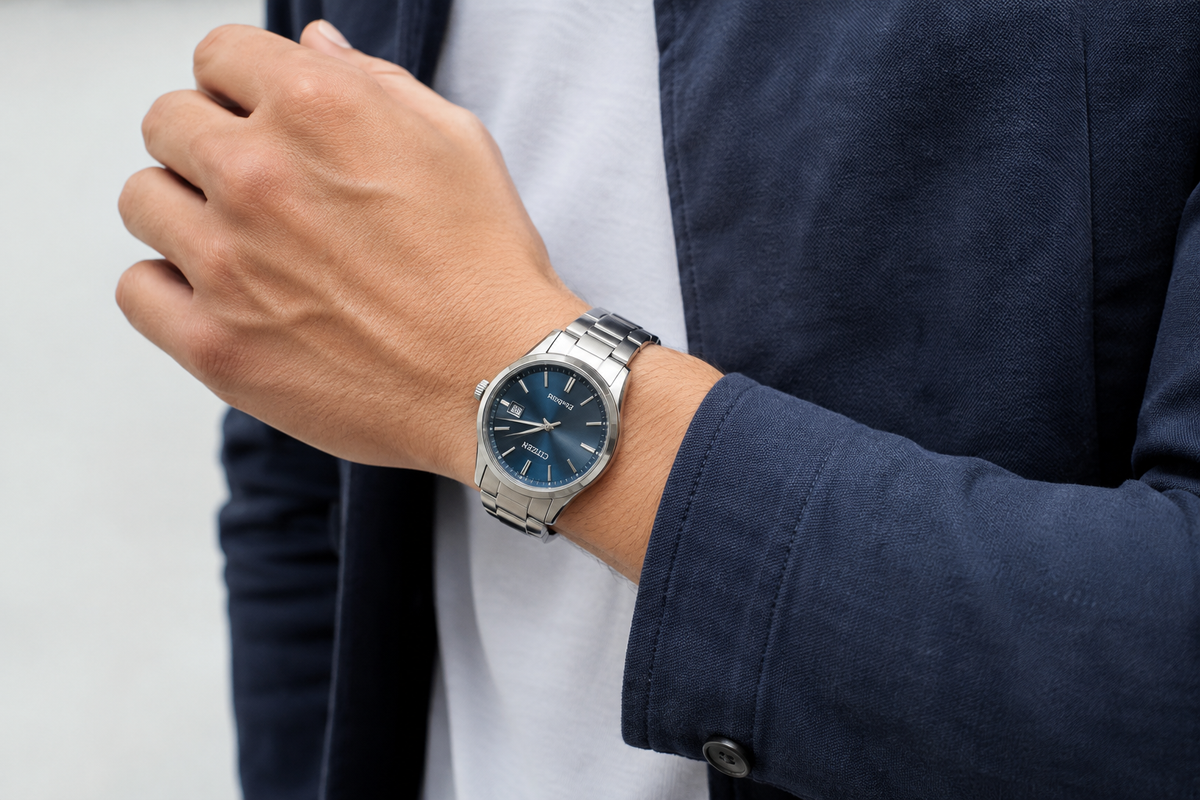
The best place to start is with your own routine. A guy who's in business attire all week is likely to prefer a slim watch with a plain dial, whereas someone with a more casual wardrobe might go for a sportier watch with a bigger case and/or more features. If you're looking for one watch to wear in a variety of situations then a neutral dial with a versatile bracelet or leather strap is the way to go and will make it far easier to match your watch with your outfit.
Before you even start browsing, think about your own typical activities, your preferred colours and your comfort requirements. The men's watch collection is a good place to start if you're looking to compare different case shapes, dial colours, brands and designs. Just treat the category label as a pointer rather than a prescriptive rule as it's all very much a case of personal preference as to what you ultimately go for.
Understand the Difference Between Quartz and Automatic Movements
Quartz watches use an electronic oscillator (the time keeping element) which is itself regulated by a quartz crystal. Most of the conventional quartz watches are battery operated, require far less maintenance than a mechanical watch and are a very sensible choice for someone who just wants a watch to tell the time. There are also solar quartz watches which use light to recharge their power source (though the specifics of the charging and storage requirements will vary from model to model).
Automatic watches are mechanical watches which wind themselves via the motion of the wearer's wrist (within the limits of their winding system and power reserve). They are the type of watch that appeals to those who like the traditional watch and the mechanics of it, though they do require periodic servicing and can stop if left unworn for long enough. If you're after an automatic watch then have a look at the men's automatic watches and check the specification of each model before making a decision.
Match the Watch Design to the Occasion
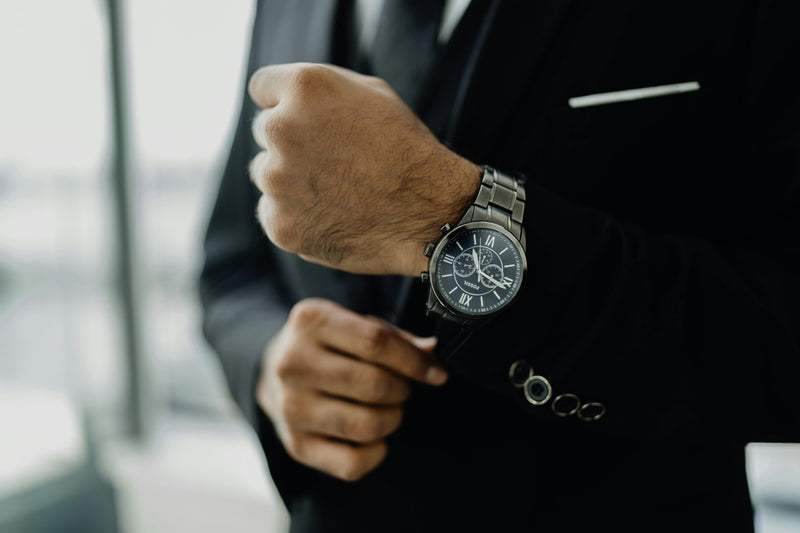
Dress watches generally go for a fairly restrained dial, a fairly slim profile and a design that will sit comfortably beneath a shirt cuff. A leather strap can be very classic, a simple stainless steel bracelet will be quite versatile in terms of wearing it (can go from business to smart casual). For day to day wear you're looking for a dial that's easy to read and a case that doesn't feel at all cumbersome.
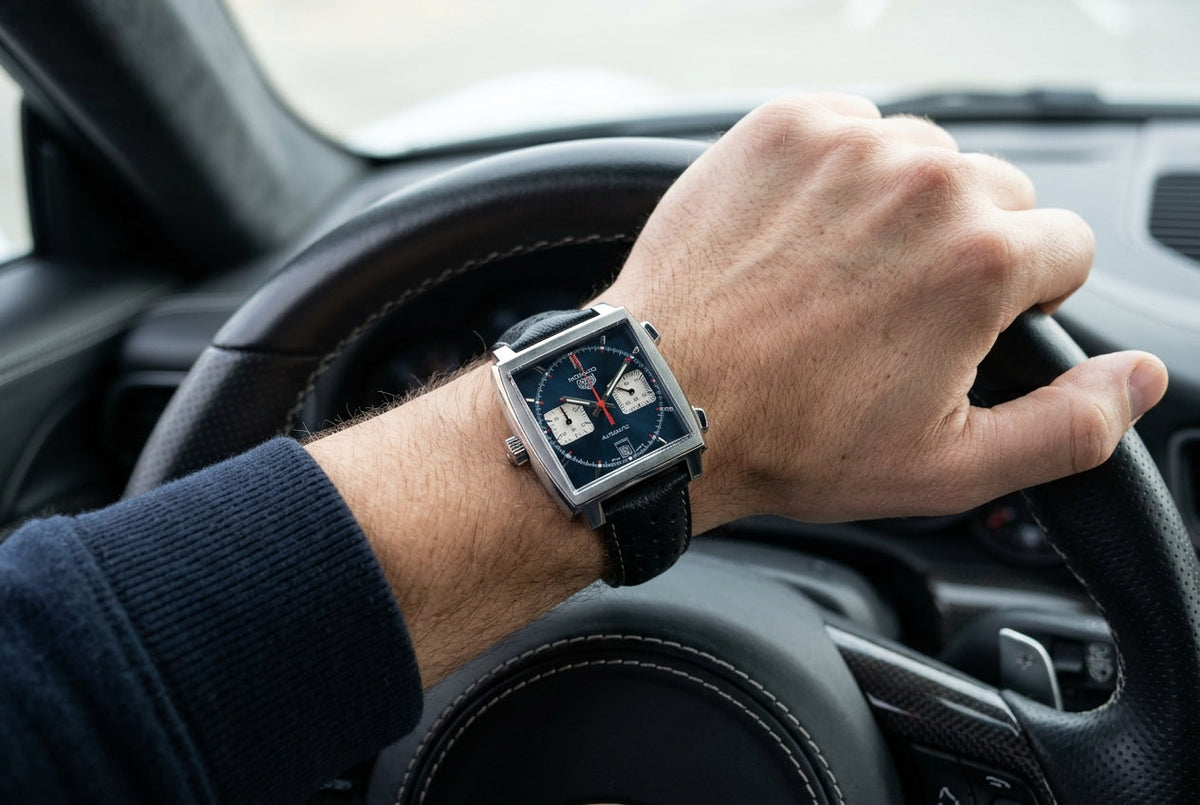
Chronographs have a stopwatch function (usually via additional pushers and subdials). The more elaborate the face, the more likely it is to have a sporty or technical appearance, though of course not every watch with multiple subdials will have the same functions. If that's the sort of thing you're after then have a look at the men's chronograph watches and check exactly what functions each model has.
Get the Case Size and Fit Right
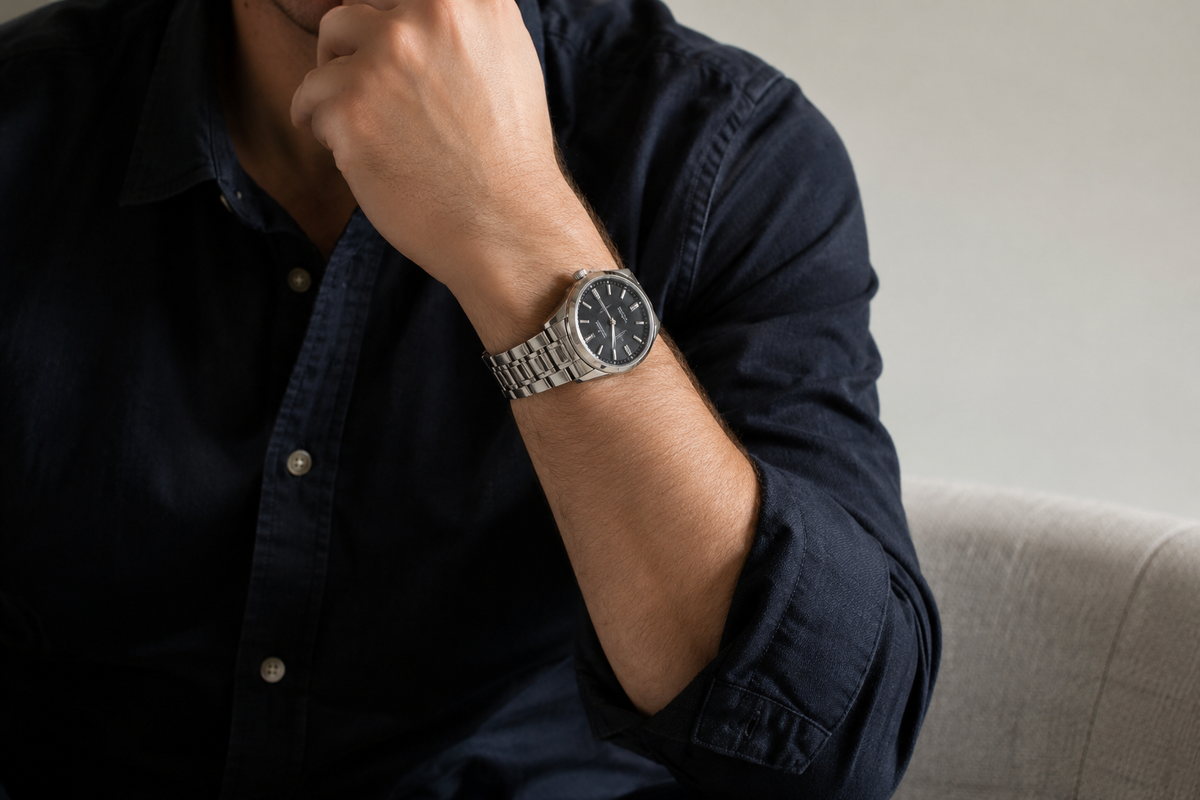
Case diameter is just one element of a watch's fit. Case thickness, lug to lug length, bracelet style and wrist size all play a part in how the watch will sit. A big case can look perfectly balanced on a wider wrist, but a watch with long lugs may well extend past the edge of a narrower wrist even if the case diameter seems quite reasonable in isolation.
Whenever you can, compare the case size to a watch you already have that you're happy with. It should sit securely on your wrist without pinching, sliding about too much or digging into your wrist when you bend your arm. If you're buying online then check the case diameter, case thickness and strap/bracelet adjustment options listed rather than just going by the photographs.
Choose Materials That Suit Your Routine
Stainless steel is the most common case and bracelet material as it's a very durable and versatile finish. Different grades and finishes of stainless steel have different characteristics so the material description on its own doesn't really tell you all that much about the quality of the watch. Steel bracelets can also be adjusted by removing links (again this will probably require a watchmaker or some suitable tools).
Leather straps have a more traditional look but will degrade over time with exposure to sweat, moisture and heat. Silicone straps are generally quite practical for active use as they're flexible and easy to clean (comfort and durability again will vary with the design). With the men's watch collection you'll need to look at the actual strap material, the clasp and the case finish to see what combination suits you.
Read Water Resistance Ratings Before Wearing Your Watch Near Water
Water resistance is a key specification, especially if you're going to be wearing the watch outdoors or around a pool. The ratings (30m, 50m, 100m etc.) are all based on standardised tests but should not be read as a guarantee that you can simply take the watch down to that depth and it will cope. Water pressure, the movement inside the watch, temperature changes and the condition of the seals all have an impact.
A watch rated at 30m is generally intended for limited water exposure (subject to the manufacturer's instructions) rather than for swimming or diving. A higher rating may be appropriate for more demanding activities, provided the manufacturer allows it. Always check the water resistance rating and operating instructions for the specific model before you buy. If you're after a more active watch you can look at the men's sports watches and then check the specs of any watch you're considering.
Consider the Details That Affect Everyday Use
Small design features can make a big difference to day to day comfort. A clear date display is useful if you're checking the date all the time. Luminous hands and markers will of course help with legibility in the dark. A rotating bezel, multiple time zones or a tachymeter may be useful for certain activities but you're only going to want to pay for those if you're going to use them.
The crystal on the dial is worth a mention too. Mineral crystal is the usual choice and provides adequate everyday protection, sapphire crystal is the more scratch resistant of the two. Neither is a guarantee of a completely indestructible watch and the whole design is still the key thing. You need to compare the spec, the face layout, the clasp and the crystal before you go for a watch with any extras you don't actually need.
Explore Brands Without Choosing on Name Alone
Brand identity will have an effect on the design, the price and the appeal of the watch but it shouldn't be the sole factor in your decision. Two watches from two different brands could have the same movement and the same materials and yet have very different case proportions, finishes, levels of functionality, warranty terms and so on. You need to look at the individual models and compare the detail. Don't just assume that because a watch is from a well known brand it's necessarily the better watch.
If you're still in the process of working out what you like then the shop by brand directory is a useful tool to allow you to compare different brands in one place. Take a look at the specs and the warranty on each of the watches you're considering and make sure you know what you're getting. A good watch is one that meets your requirements in a practical sense and one that you like the look of, not necessarily the one with the most famous brand name.
Set a Realistic Budget and Think Beyond the Purchase
A good budget will take into account both the initial price and the likely cost of ownership. Quartz watches will eventually require a battery replacement, mechanical watches will need periodic servicing and straps will need replacing at some point. Bracelets will need adjusting and watches will need repair. The actual cost will vary enormously depending on the model, the parts, the service provider and how the watch is used.
It's worth comparing the specs of a number of watches in your price bracket before you make up your mind. Check the warranty, the return policy, what's included and the level of service support that's available. You could start with the best-selling watches to get a feel for a range of designs that are popular, but use your own requirements and the specs listed to work out which of the watches you're looking at are worth you going any further with.
Frequently Asked Questions
What should I look for when buying watches for men?
Start with the intended use, movement type, case size, strap material, legibility, and water resistance. Set a budget and compare the specifications of individual models. The best choice is one that feels comfortable, suits your style, and provides the functions you will genuinely use.
Are quartz or automatic watches better for everyday wear?
Neither type is universally better. Quartz watches are often convenient for people who want straightforward timekeeping with relatively little routine attention. Automatic watches appeal to those who enjoy mechanical movements and traditional watchmaking. Your preference for convenience, mechanics, and maintenance should guide the choice.
What watch size should I choose for my wrist?
There is no single ideal case diameter for every wrist. Consider the diameter, thickness, lug-to-lug length, and overall shape together. A watch should sit comfortably without its lugs extending noticeably beyond the wrist. Checking measurements against a watch you already wear can help.
Can I swim with a watch rated at 50 metres?
Do not assume that every 50-metre-rated watch is suitable for swimming. Follow the manufacturer's guidance for the exact model and consider the watch's age, seal condition, and service history. Water resistance can deteriorate over time, especially if seals have not been maintained.
Is a stainless steel bracelet better than a leather strap?
They serve different preferences. Stainless steel is versatile and generally handles ordinary daily wear well, while leather provides a classic appearance that works particularly well with formal or business clothing. Your climate, activity level, comfort, and willingness to maintain the strap should influence your decision.
Are expensive watches always better quality?
Price alone does not establish quality or suitability. Materials, movement construction, finishing, functionality, serviceability, and brand positioning all influence a watch's price. Compare the specifications and ownership requirements of the actual models you are considering instead of relying on price as a shortcut.
How do I maintain a watch so it lasts longer?
Follow the manufacturer's care instructions, keep the watch clean using an appropriate method, and avoid exposing it to conditions beyond its stated limits. Replace worn straps or damaged components when necessary, and have water resistance checked when recommended, particularly before water-related activities. Mechanical watches should receive servicing according to their manufacturer's guidance.
Where can I compare different styles of men's watches?
You can compare case shapes, movements, materials, colours, and functions through the Watches of Australia men's watch range. Review the specifications and conditions for each model, then narrow your choices to the watches that match your budget, wrist fit, and everyday requirements.

Written by Kareem Elboray